
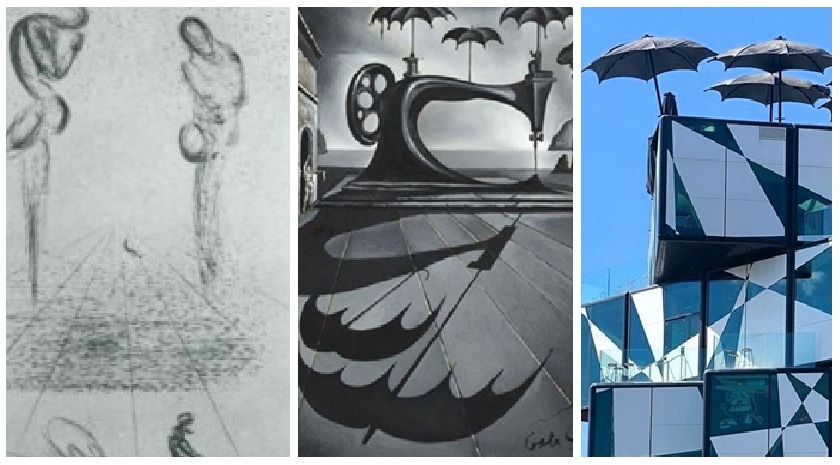
“Beautiful as the fortuitous encounter on a dissecting table of a sewing machine and an umbrella”.
Isidore Ducasse, better known by the pseudonym Count of Lautréamont
.
April 2026 represents a truly magical moment for the world of art. We are celebrating two extraordinary birthdays: the 100th anniversary of the Surrealist movement becoming a powerful force in society (1926), and the 200th anniversary of the birth of Gustave Moreau (1826).
Moreau was the great master of symbols and myths; the Surrealists loved him like a “spiritual father” because he was the first to show how to paint the mysterious world of our dreams and the deep subconscious.
It was precisely in this fertile atmosphere of 1926 that the genius of a young Salvador Dalí began to germinate conceptually within the Parisian orbit.
In 1926, Dalí made his first transformative trip to Paris and his meeting with Picasso, events that catalysed his eventual immersion into the black hole of influence exerted by the Comte de Lautréamont’s “Bible” of Surrealism: Les Chants de Maldoror.
.
.
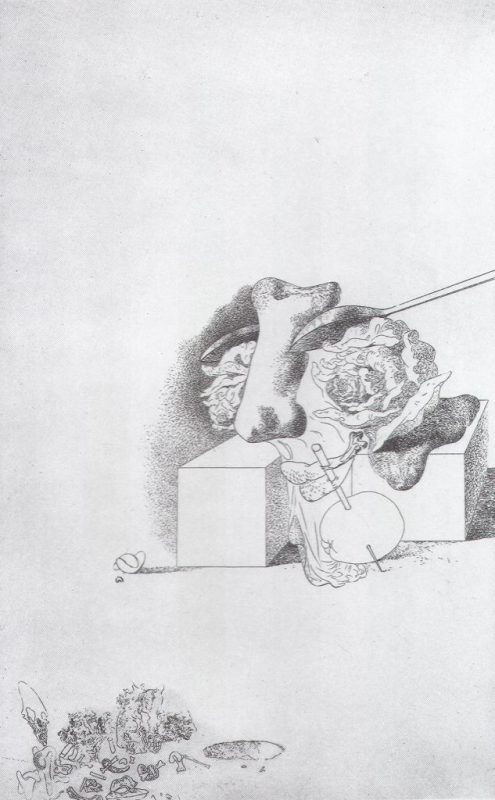
Dalí did not merely illustrate the text; he used his “Paranoiac-Critical method” to excavate the marrow of Lautréamont’s violent prose.
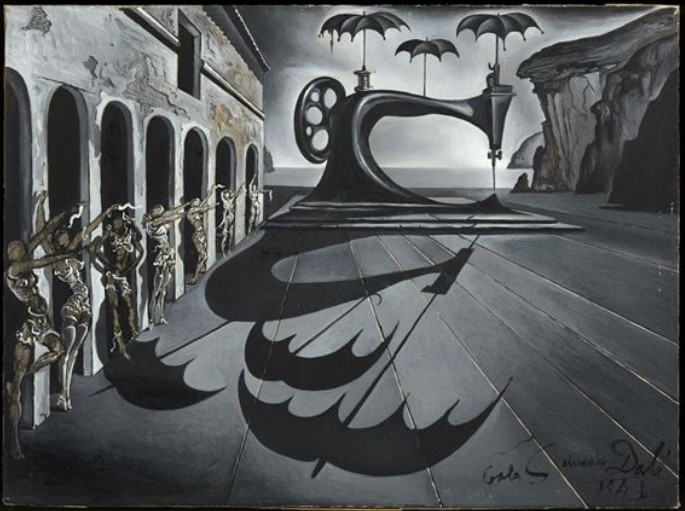
He focused on the most famous metaphor of the movement: “Beautiful as the fortuitous encounter on a dissecting table of a sewing machine and an umbrella”.
.
.
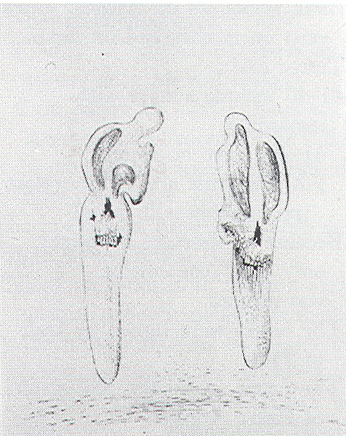
In Dalí’s hands, these objects are not mere props; they are surrealist hybrids. Through 42 etchings, the Master of Surrealism transformed the “man-umbrella” and the “woman-machine” into delirious personifications of repressed desire and anatomical terror.
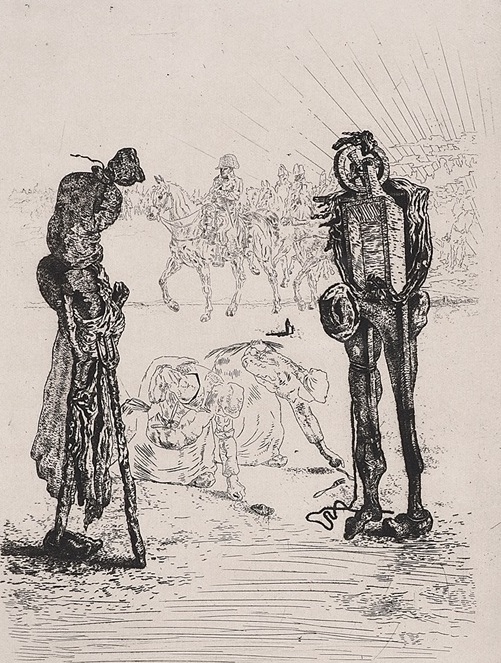
The Rosetta Stone of these illustrations is the work titled Quelque Chose a eu Lieu (1934). Here, Dalí reinterprets Millet’s Angelus, replacing the pious peasants with the umbrella and the sewing machine.
Dalí himself explained this obsession: “If, as we claim, the ploughed earth is the most literal and the most advantageous of all known dissection tables, the umbrella and the sewing machine had been transformed in The Angelus into a male figure and a female figure”.
.
.
The umbrella, according to Dalí, attempts to hide its state of erection behind a “shameful hat”, while the sewing machine proclaims the “mortal and cannibalistic virtue of its needle”, identifying with the praying mantis that devours the male after the “paroxysmic” act.
This was not mere fantasy. Dalí’s intuition, his belief that Millet’s original painting hid a coffin of a dead child beneath the layers of paint, was later confirmed by X-ray analysis at the Louvre: “A dark mass appeared on the plate in the precise place I had indicated to them”, declared Dalí.
.
.
The original edition of Les Chants de Maldoror illustrated by Dalí remains one of the most precious artist books in existence. It captures a “dance macabre” where the everyday object becomes monstrous.
In these illustrations, Dalí established an iconography of decomposed figures that continues to haunt our cultural imagination a century later.
As we reflect on these hundred years of Surrealist power, it is impossible not to look toward Australia, where the spirit of Dalí finds a unique architectural home.
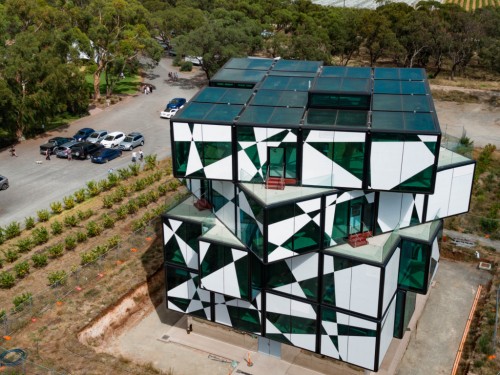
The d’Arenberg Cube in McLaren Vale, which houses a magnificent Dalí Universe Collection, celebrates its own landmark in 2026: 10 years of collaboration between the Dalí Universe and Art Evolution.
.
.
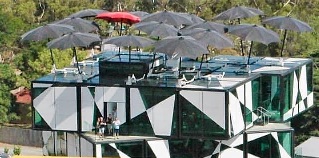
In a stunning tribute to the very iconography discussed in this article, the roof of the d’Arenberg Cube features a striking installation. You will find a sea of umbrellas; all of them are black, except for one solitary red umbrella.
.

.
This lone red splash amidst the darkness perfectly mirrors the “fortuitous encounter” of Lautréamont’s prose and Dalí’s vision: a singular, vibrant spark of genius rising out of the black hole of the subconscious.
From the dissecting tables of 19th-century Paris to the rooftop of a futuristic glass cube in Australia, the link remains unbroken. Salvador Dalí, Les Chants de Maldoror, and these overlapping anniversaries remind us that the aesthetics of the monstrous is not a thing of the past, but a living, breathing, and eternally provocative reality.
.
“Surrealism is destructive, but it destroys only what it considers to be shackles limiting our vision”.
Salvador Dalí