
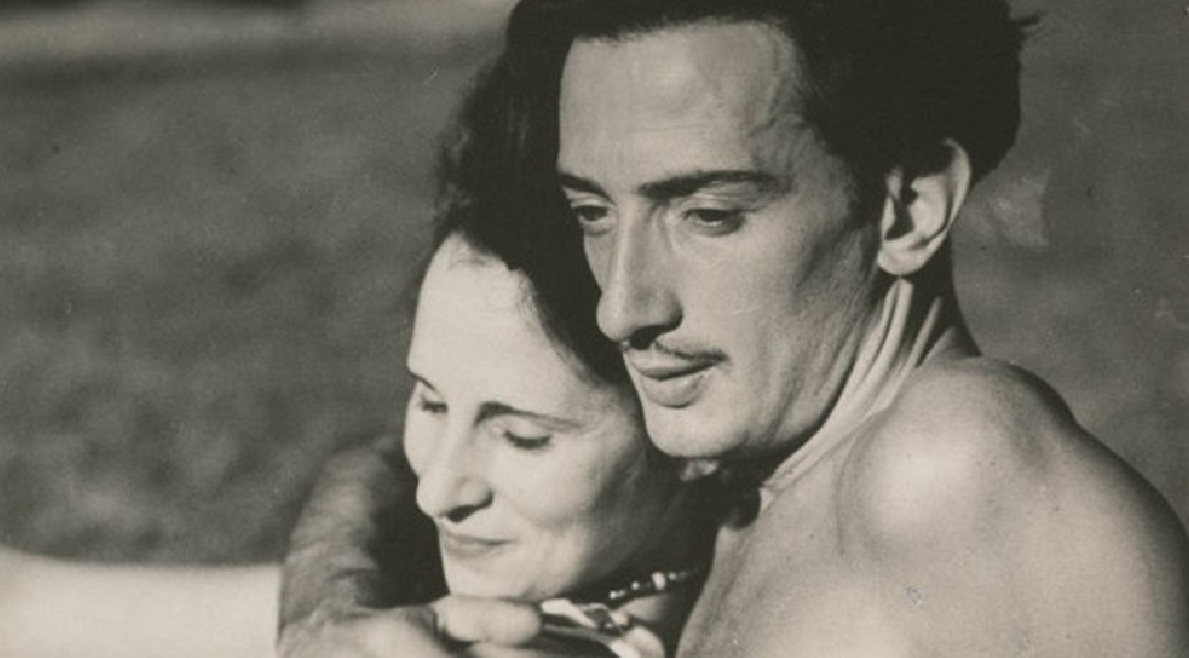
“My secret is that I will never tell you all of my secrets”.
Gala Dalí
In the surrealist world of Salvador Dalí, few figures shine as brightly and as mystically as Gala. Known to the world as Dalí’s wife, muse, and collaborator, Gala was the central star around which Dalí’s entire universe revolved.
As we celebrate her birthday this week, we delve into the extraordinary story of the woman who was not only Dalí’s muse but also his manager, his saviour, and his eternal obsession.
Born Elena Ivanovna Diakonova in Kazan, Russia, on September 7th, 1894, Gala was a woman of immense intellectual and personal magnetism. Before meeting Dalí, she was a central figure in the Parisian Surrealist movement, inspiring poets and artists alike, including her first husband, Paul Éluard, and the painter Max Ernst. But it was in the summer of 1929, when she was invited with Éluard to Dalí’s home in Cadaqués, Spain, that her destiny was irrevocably changed.
Savador Dalí, a young, tormented artist, was immediately captivated by her. For him, it was love at first sight so profound that he saw in her not just a lover, but a divine mother figure, a spiritual partner who could guide him out of his inner turmoil.
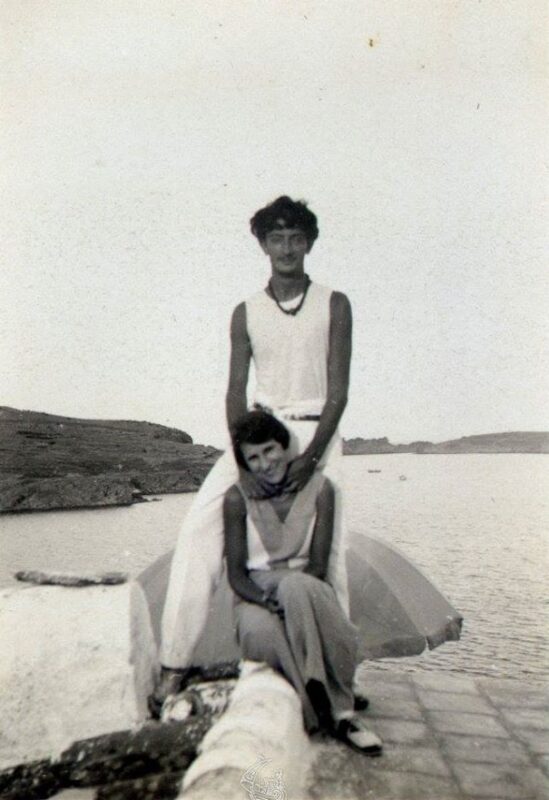
The Catalan artist was so completely enthralled that he wrote: “She was destined to be my Gradiva, the one who advances, my victory, my wife”. This meeting marked the beginning of a legendary union that would define the rest of his life and career.
Gala was the pragmatic force behind Dalí’s explosive genius. She organized his life, managed his finances, and tirelessly promoted his work, fiercely negotiating with gallery owners and collectors.
It was she who saw the potential for a global phenomenon and pushed him to pursue fame and fortune in America. Dalí himself famously acknowledged her influence, declaring: “It is mostly with your blood, Gala, that I paint my pictures”.
The anecdotes of their life together are as surreal as Dalí’s paintings. Gala was a formidable woman, often perceived as domineering and even tyrannical by some in their circle, but to Dalí, she was his queen.
Their relationship, while unique and at times unconventional, was a symbiotic masterpiece. Dalí famously stated that he loved her so much he would “polish Gala to make her shine, make her the happiest possible, caring for her more than myself, because without her, it would all end”.
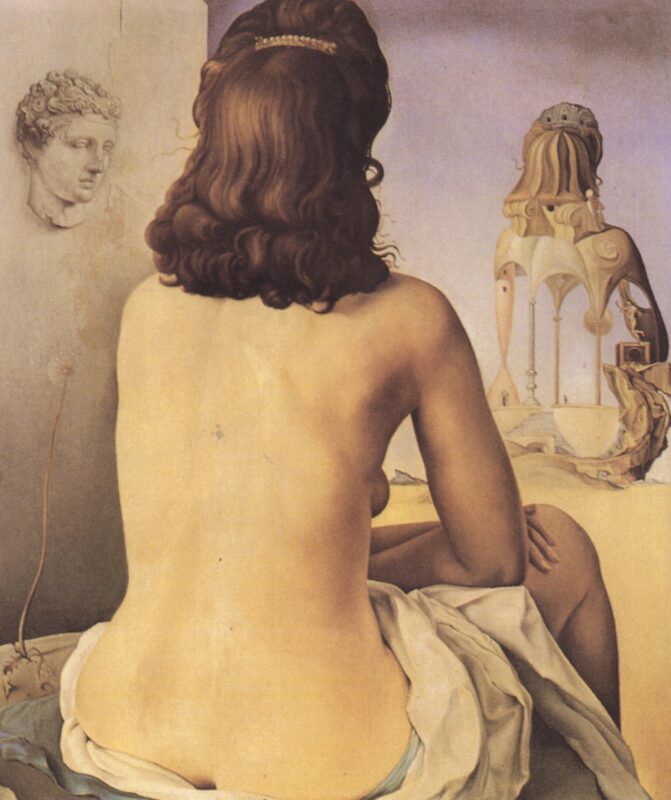
The depths of his devotion were also expressed through art. The Master of Surrealism painted her hundreds of times, casting her in the most powerful roles, from the Virgin Mary in The Madonna of Port Lligat, to “My Wife, Nude, Contemplating her own flesh becoming Stairs, Three Vertebrae of a Column, Sky and Architecture”, and as the central figure in Galatea of the Spheres.
Dalí even began signing his works with both their names, “Dalí-Gala”, as a testament to their inseparable creative partnership. This was more than a gesture; it was a profound acknowledgement that his art was not his alone, but a product of their shared existence.
In 1968, Dalí cemented his love and gratitude by purchasing the castle of Púbol for Gala, a medieval fortress that became her private sanctuary. He could only visit with her written permission, a symbolic gesture that underscored his reverence for her independence and privacy.
After her death in 1982, Dalí was inconsolable. He moved into the castle, refusing to leave and falling into a deep depression, which marked the final, tragic phase of his life.
Gala’s legacy is undeniable. She was the one who gave the world Salvador Dalí as we know him, the one who transformed a brilliant but fragile young man into one of the most celebrated artists of the 20th century.
Her ambition, her business intelligence, and her unwavering faith in his genius were the foundation of his success. The story of Dalí and Gala is not just a love story; it is the story of two singular souls who, together, created an artistic universe that continues to fascinate and inspire.
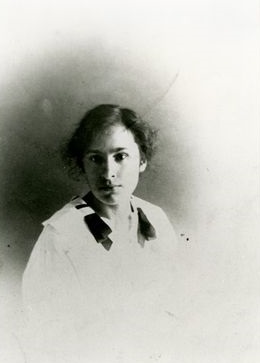
“Gala became the salt of my life, my lighthouse, my double, myself”.
Salvador Dalí
Cover image: Gala and Salvador Dalí, c. 1933, © Fundació Gala – Salvador Dalí.